What Will You See on a Tokyo Helicopter Tour?

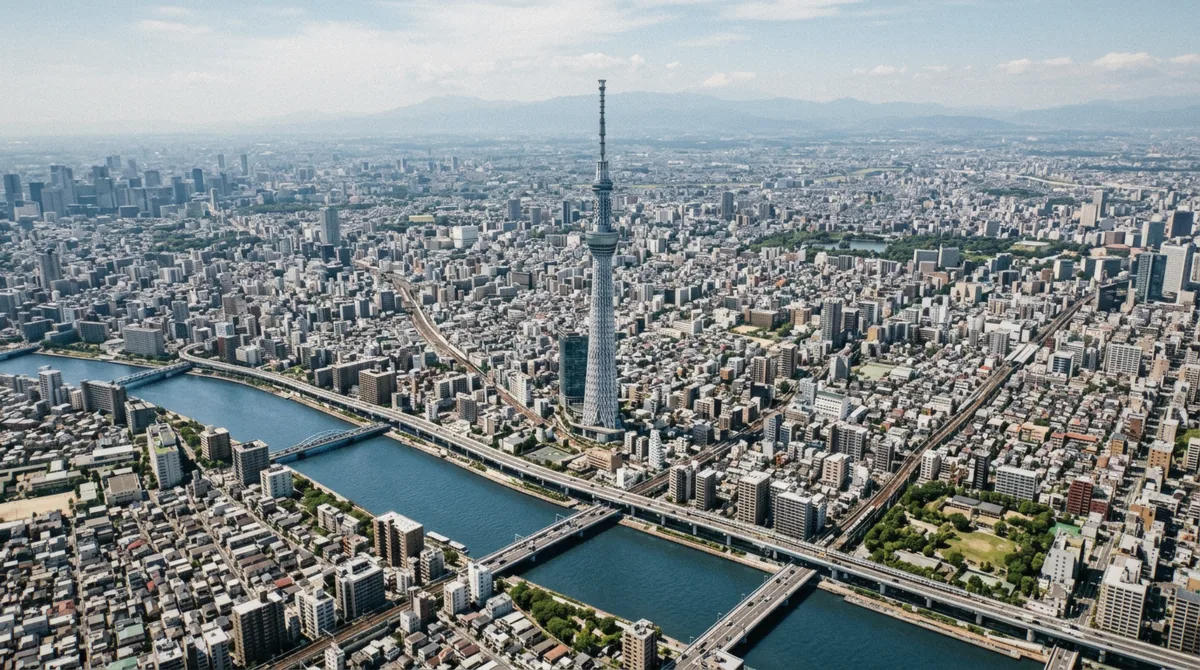
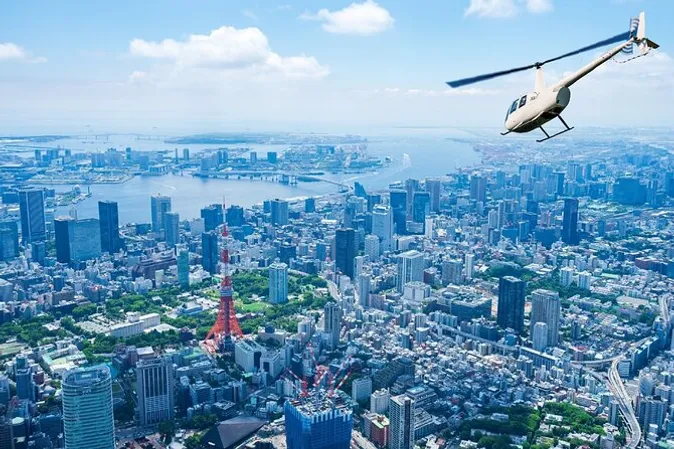
What will you see on a Tokyo helicopter tour? On nearly every flight, Tokyo Skytree and the Sumida River skyline stretched out below it. On most flights, Tokyo Tower, Rainbow Bridge and the reclaimed waterfront of Odaiba as well. On a clear day, Mount Fuji sitting on the horizon roughly 100 kilometers to the southwest, though only the 90-minute route actually flies close enough to see it as more than a distant peak. None of this is guaranteed in the marketing sense, because routes shift with the wind and the pilot always chooses the safe path over the promised one, but the pattern below holds often enough to plan a flight around it. If you're still deciding whether a Tokyo helicopter tour is worth it, the landmarks below are usually what settles it. What you actually see depends on the route, so it is worth checking each Tokyo helicopter route against the landmarks you care about.
Quick answer
You'll almost always see Tokyo Skytree and the skyline along the Sumida River, very often Tokyo Tower, Rainbow Bridge and Odaiba as well, and on a clear day Mount Fuji sits on the horizon to the southwest. The 90-minute route is the only flight that reaches Fuji up close rather than as a distant silhouette.
Key takeaways
- Tokyo Skytree shows up on nearly every flight; it's the one landmark every route is built around
- Tokyo Tower, Rainbow Bridge and Odaiba show up on most flights, especially the bay and downtown routes
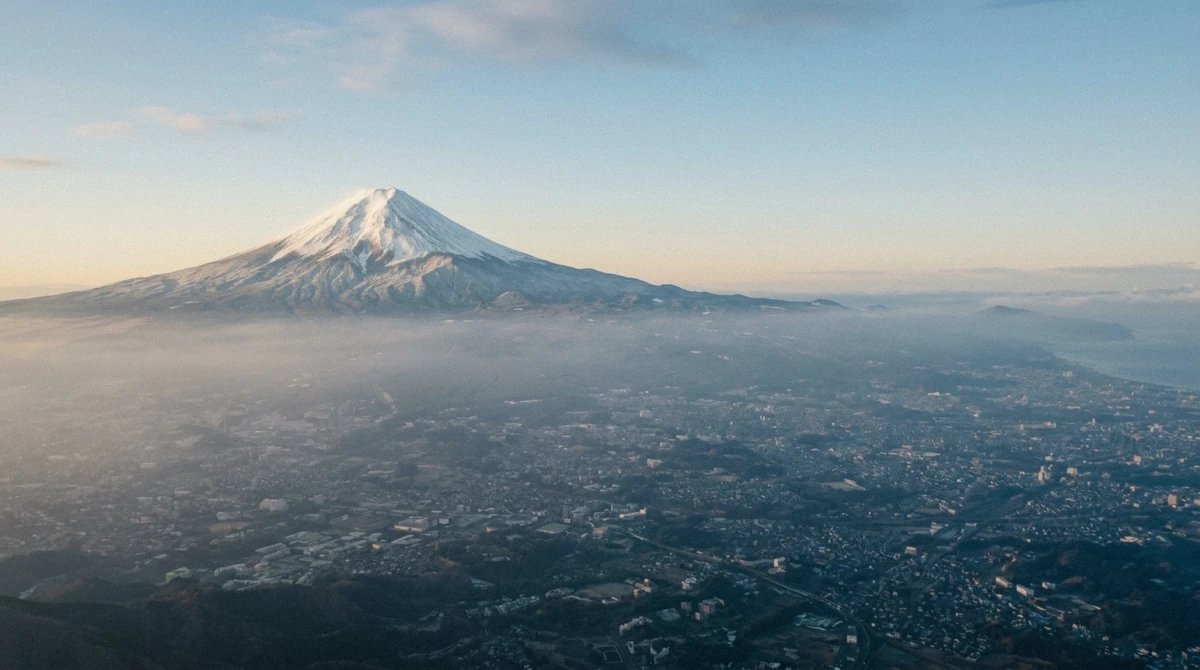
- Mount Fuji from the shorter city flights is a clear-day bonus on the horizon, not a given; only the 90-minute Fuji route gets genuinely close
- The most common mix-up: Fuji hides behind summer haze more often than people expect, even in its own best season
- The at-a-glance table below maps every major landmark to the flight that actually covers it
At a Glance: What Each Flight Covers
Likelihood below is described honestly, not as a guarantee. Which flight covers each landmark also depends on wind and the pilot's chosen route that day.
| Landmark | Where in Tokyo | Which flight covers it | How likely |
|---|---|---|---|
| Tokyo Skytree | Sumida, eastern Tokyo, along the river | Nearly every downtown and bay route | Nearly every flight |
| Tokyo Tower | Minato, central Tokyo | Downtown routes, most clearly the 25-minute and 30-minute tours | Most flights |
| Rainbow Bridge & Odaiba | Tokyo Bay, between Minato and the Odaiba waterfront | The bay-focused 10-minute tour, glimpsed on takeoff from most others | Most flights |
| Shibuya & Shinjuku | West-central Tokyo skyline | The flexible flight and the 30-minute downtown route | Most flights |
| Imperial Palace | Chiyoda, central Tokyo | The 30-minute private tour's route | Only on the 30-minute tour |
| Asakusa & Senso-ji | Eastern Tokyo, along the Sumida riverside | The 30-minute private tour's route | Only on the 30-minute tour |
| Tokyo Station | Marunouchi, central Tokyo | The Skytree & Tokyo Station Tour's route, near the Imperial Palace pass | Only on the Skytree & Tokyo Station tour |
| Mount Fuji | About 100 km southwest, on the horizon or up close via Hakone | On the horizon from any clear-day city flight; up close only on the 90-minute Fuji route | On a clear day; only on the 90-minute flight up close |
Skytree is the closest thing to a sure bet here, since it sits along the Sumida and is visible from nearly every route out of the bay. Everything past that gets more route-dependent, which is exactly why the flight-by-flight breakdown further down matters more than the table alone.
Right After Takeoff
The first minutes off the ground put you over Tokyo Bay, and this stretch belongs to the water rather than the skyline. Rainbow Bridge's white suspension towers appear almost immediately, spanning the gap toward the reclaimed island of Odaiba, where the Ferris wheel and the waterfront towers sit low against the bay. This is the entire flight on the shortest bay-focused tour, and it's a genuinely good primer even for passengers who go on to book a longer route later, since it establishes the scale of the harbor before the city skyline crowds the view.
Cargo ships and pleasure boats thread the shipping lanes below, and on a clear morning the water itself turns a flat, pale blue that photographs better than most people expect from a working harbor. It's also the calmest few minutes of most flights, since the aircraft is still climbing to cruising height and hasn't started the tighter turns that come once the route reaches the denser part of the city.
Over the City
Once the route turns inland, Tokyo Skytree is usually the first thing that pulls attention, its lattice frame rising well above everything around it along the Sumida. Tokyo Tower follows on most downtown routes, its red and white frame a deliberate visual echo of the older Tokyo it was built to represent. Longer downtown flights swing further west toward the dense towers of Shibuya and Shinjuku, then back across the Imperial Palace's forested grounds, a startling patch of green sitting in the middle of one of the densest cities on earth. The most complete of the downtown routes adds Asakusa's Senso-ji temple district along the river and the low, formal rooftops around Tokyo Station, stitching together old Tokyo and new Tokyo in the same twenty to thirty minutes.
What surprises most first-time flyers isn't any single landmark, it's how compressed the whole city looks from a few hundred meters up. Blocks that take twenty minutes to cross by train pass in seconds, and the grid of streets around Shinjuku or Shibuya reads as a genuine pattern rather than the confusing tangle it feels like at ground level. This is also where the pilot's route judgment matters most, since downtown airspace is busier than the open bay, and the exact path between landmarks shifts slightly flight to flight depending on other air traffic and the day's wind.
The Views You Hope For
This is the part no operator can promise, and the honest answer is better than a false one. On a genuinely clear day, Mount Fuji sits on the horizon to the southwest, a pale triangular silhouette beyond the edge of the city, distinct enough to recognize but still a long way off from any of the shorter flights. Evening departures trade that horizon view for a different reward: the city lights coming up under a darkening sky, Tokyo Tower and Skytree both lit, the bay reflecting whatever's left of the sunset.
Which of these you actually get depends on the day, the season and the route the pilot judges safest, and no honest operator will tell you otherwise.
What You Won't Always See
Mount Fuji from the shorter city flights is a clear-day bonus, not a given, and it's worth being honest about how often that clear day actually happens. Summer humidity and haze hide the mountain on plenty of days even during months when it's technically visible more often, and travelers who assume Fuji is a fixture of every Tokyo flight are usually working from a photo taken on an unusually clear morning, not the typical day. For the season with genuinely better odds, see the best time of year to fly over Tokyo, which covers the month-by-month visibility pattern in full.
Where Each Flight Takes You
The landmarks above map fairly cleanly onto the actual tours, and knowing which flight goes where makes the choice easier than reading a list of names in isolation.
- The Tokyo Bay flight stays over Tokyo Bay, Rainbow Bridge and Odaiba, the shortest and simplest introduction to seeing the city from the air
- The 25-minute downtown tour, with an evening departure option, covers Skytree and Tokyo Tower over the core of the city
- The 30-minute Asakusa and Skytree flight is the most complete downtown route, adding Asakusa, Shibuya and the Imperial Palace to Skytree and Tokyo Tower in a single flight
- The 90-minute Mount Fuji flight is the only route that reaches Fuji up close, along with Lake Ashinoko in Hakone, Enoshima Island, Yokohama Landmark Tower and Kamakura
Lined up side by side, here's what every flight on the roster actually covers.
| Flight | Duration | Landmarks it covers | Reaches Mount Fuji? |
|---|---|---|---|
| Tokyo Bay Helicopter Tour | 10 min | Tokyo Bay, Rainbow Bridge, Odaiba | On a clear day, on the horizon |
| Skytree, Shibuya & Shinjuku Flight (flexible) | 10 to 30 min | Tokyo Skytree, Shibuya, Shinjuku | On a clear day, on the horizon |
| Tokyo Skytree Private Tour | 15 min | Tokyo Skytree | On a clear day, on the horizon |
| 25-Minute Downtown Tour | 25 min | Tokyo Skytree, Tokyo Tower | On a clear day, on the horizon |
| Private 30-Min Tour | 30 min | Asakusa, Tokyo Skytree, Shinjuku, Shibuya, Imperial Palace | On a clear day, on the horizon |
| Skytree & Tokyo Station Tour (4 passengers) | 15 min | Tokyo Skytree, Imperial Palace, Tokyo Station | On a clear day, on the horizon |
| 10-Min Tour + Private Car Pickup | 10 min | Imperial Palace, Tokyo Tower, skyscrapers | On a clear day, on the horizon |
| 10-Minute Tour with Hotel Pickup | 10 min | City skyline landmarks | On a clear day, on the horizon |
| Mt. Fuji + Kamakura Private Tour | 90 min | Mount Fuji, Lake Ashinoko, Enoshima Island, Yokohama Landmark Tower, Kamakura | Only on the 90-minute flight |
How to See the Most
A few things I've picked up shooting this skyline from the air more times than I can count.
- Book a morning slot when you can. Calmer air in the early hours tends to mean a steadier ride and clearer light for photos than the haze that builds into the afternoon
- Use the headset. It's not just for the safety briefing, the pilot can hear you ask which side of the aircraft a landmark is coming up on, and a polite request to bank slightly toward it is often welcomed rather than ignored
- Sit by the window and actually look rather than shooting through a phone screen the whole flight; the landmarks read differently at a glance than they do zoomed into a viewfinder
- Keep gear simple. A fast shutter speed matters more than a wide zoom for handheld shots through a moving aircraft, and a lens hood or a hand cupped near the glass cuts down reflections
- If Mount Fuji matters most to you specifically, book the 90-minute route on a clear morning rather than hoping for a lucky glimpse from a shorter flight
Avoiding what trips people up here does more for what you actually walk away with than any camera setting, especially the ones around seat choice and timing.
Frequently Asked Questions
Which flight gets you closest to Mount Fuji?
Only the 90-minute Mount Fuji and Kamakura tour flies close enough to see Fuji as more than a distant silhouette; every shorter city flight leaves it on the horizon at best, and only on a clear day.
Do all the flights fly over both Tokyo Tower and Tokyo Skytree?
Not quite. The shortest tour stays over the bay and doesn't reach either tower. The downtown and private routes generally cover both, with the 30-minute private tour adding the most additional landmarks around them.
Will you fly directly over Shibuya or Shinjuku?
On the flexible flight and the 30-minute private downtown route, most flights swing over or near Shibuya and Shinjuku, though the exact path shifts with wind and air traffic on the day.
Can you see the Imperial Palace from the helicopter?
Regularly, on the 30-minute private tour's route, which is built to cover it alongside Asakusa and the downtown towers. It's not part of the shorter routes.
Which side of the helicopter should I sit on for the best view?
There's no universally better side, since the route curves both ways over the course of a flight and which landmark falls to which side changes with the specific path the pilot flies that day. The practical fix is asking through the headset once you're airborne: a polite request for a slight bank toward a landmark on your side is normal and welcomed, so engaging with the pilot in the air beats trying to guess a seat in advance.
Do night flights show a different view than daytime flights?
Yes, and it's a genuinely different experience rather than a dimmer version of the same one. Instead of the horizon and distant landmarks, a night flight is built around the lit skyline itself, Tokyo Tower and Skytree both illuminated against the dark city below.
What's the one thing people expect to see but usually don't?
Mount Fuji on every flight. It's a genuine highlight on a clear day from the right route, but plenty of days, even in seasons with better odds, hide it behind haze, so it's worth treating as a bonus rather than the reason to book a shorter city flight specifically.
I've flown this skyline enough mornings to know which views hold up and which ones depend on luck. Skytree and the river skyline are close to a sure thing, the downtown towers and the bay follow close behind, and Mount Fuji stays exactly what it is: the best possible bonus on a clear day, and the main event only on the one flight built to reach it. Compare all the aerial tours of Tokyo side by side before picking the route that matches the view you actually want.