Best Time for a Tokyo Helicopter Tour: Month-by-Month Guide

The best time for a Tokyo helicopter tour is late autumn through winter, roughly November through February, when dry air and calm skies give you the clearest views over the city and the best odds of a Mount Fuji sighting on the flight. October is the honest runner-up, once typhoon season has largely passed but before the driest winter air fully sets in. The window to avoid is June through early September, when the rainy season and then typhoon season stack humidity, haze and real cancellation risk on top of each other. I fly this route often enough as a photographer to know the difference a clear winter morning makes over a hazy August afternoon, and below is the month-by-month reasoning behind that recommendation. Once you have picked your window, see which Tokyo helicopter flight to pick for it.
Quick answer
The best time for a Tokyo helicopter tour is November through February, when dry winter air keeps haze low and gives you the best chance of seeing Mount Fuji from the cabin. October is the shoulder-season runner-up, trading a little clarity for milder temperatures. Avoid June through early September, when the rainy season and typhoon season bring the year's lowest visibility and highest cancellation risk.
Key takeaways
- November through February is the best window, driven by dry, haze-free winter air over Tokyo Bay
- October is the runner-up, with typhoon season fading and clearer skies returning before winter fully sets in
- June through early September is the window to avoid, with rainy-season humidity then typhoon-season storms cutting both visibility and flight reliability
- Wind and haze, not rain itself, are what actually determine a clear flight, a fact worth understanding before you pick a date
- Morning departures, roughly 6:00 to 9:00 AM, give the calmest air and the clearest Mount Fuji odds of any time of day
- Photographers and Mount Fuji seekers should target December through February mornings specifically, not just winter in general
Seasons at a Glance
Read the Verdict column first for the short version, then the two tables below it break down why each season earns that call.
| Season (Months) | Weather | Visibility & Fuji Odds | Crowds | Verdict |
|---|---|---|---|---|
| Winter (December to February) | Cold, dry, mostly clear skies | Best of the year, Mount Fuji visible on most clear mornings | Moderate, a brief New Year spike | Best overall, clearest air |
| Spring (March to May) | Mild, rain increasing into May | Good early, haze builds as humidity rises | High, cherry blossom season | Strong pick, book early |
| Summer (June to August) | Hot, humid, rainy season then typhoon risk | Weakest of the year, haze and cloud dominate | High, summer holidays | Avoid, haze and storm risk |
| Autumn (September to November) | Cooling and drying out, typhoon risk fades by November | Improving fast, clear by late November | Moderate, a foliage bump late in the season | Strong pick, clearing skies |
Winter and autumn bookend the year as the two strongest windows, while summer stands alone as the season with both the worst visibility and the highest odds of a weather cancellation. Spring earns a strong verdict too, but it comes with the trade-off of cherry blossom crowds pushing bookings up.
Typical Monthly Conditions
These are typical Tokyo temperatures and flying conditions by month, not a forecast for your specific date. Figures come from Japan Meteorological Agency normals; check the current forecast as your dates get close.
| Month | Avg High | Avg Low | Rain (mm / days) | Flying Conditions |
|---|---|---|---|---|
| January | 10.0°C | 2.1°C | 60mm / 5 days | Clear, dry, calm mornings |
| February | 10.8°C | 2.6°C | 55mm / 6 days | Clear, dry, best Mount Fuji odds |
| March | 13.9°C | 5.4°C | 115mm / 10 days | Improving, occasional spring rain |
| April | 19.1°C | 10.4°C | 135mm / 11 days | Mild, some cherry blossom haze |
| May | 23.5°C | 15.3°C | 140mm / 11 days | Warm, humidity starting to build |
| June | 26.0°C | 19.2°C | 170mm / 13 days | Rainy season begins, low cloud common |
| July | 30.0°C | 23.1°C | 155mm / 12 days | Hot, humid, hazy skies |
| August | 31.4°C | 24.3°C | 155mm / 9 days | Hottest month, typhoon risk rising |
| September | 27.6°C | 20.8°C | 225mm / 12 days | Typhoon peak, heavy rain risk |
| October | 22.2°C | 15.3°C | 235mm / 12 days | Wettest month, lingering typhoon risk |
| November | 17.1°C | 9.6°C | 95mm / 8 days | Clearing fast, good visibility returns |
| December | 12.4°C | 4.5°C | 60mm / 6 days | Cold, dry, clear skies settle in |
August is the hottest month at an average high near 31.4 degrees Celsius, January the coldest with lows around 2.1 degrees, and October the wettest month of the year. These are typical Japan Meteorological Agency normals, so it is worth checking the current forecast once your dates are close.
Best Time by Traveler Type
If a photographer
book December through February and take a morning slot. Dry winter air with minimal haze is what gives aerial photos over Tokyo their clarity, far more than any single sunny afternoon in summer can.
If a first-timer unsure which month to pick
aim for November. It is the most reliably clear window without winter's deep cold or summer's typhoon risk, which makes it the least likely month to run into a weather cancellation.
If hoping specifically to see Mount Fuji
fly December through February on a morning departure, and consider the longer Mount Fuji and Kamakura route rather than a standard skyline flight, since it is built around that view.
If visiting for cherry blossom season
book as early as you can for late March into early April, the roughly one-week bloom window, since flights and hotels both fill up fast that week.
If trying not to waste money on a rebooking
avoid June through early September. That is when rainy-season humidity and peak typhoon season combine to make a weather cancellation most likely, which is the real cost of a badly timed date.
Spring (March to May): Cherry Blossoms and Building Haze
Spring opens cool and clear, then warms and thickens with humidity as it goes. Tokyo's cherry blossoms typically reach first bloom around March 25th and full bloom around April 2nd, with a viewing window of about a week that shifts a little year to year. Flying over parks and riverbanks in full bloom is a genuine spring highlight, but the honest trade-off is booking pressure: hotels and flight slots both tighten during that week, so plan ahead if your dates depend on catching it.
By May, daytime highs push past 23 degrees Celsius and humidity starts building toward the rainy season, which softens the crisp winter clarity into a gentler haze. The flexible Skytree, Shibuya and Shinjuku flight, which lets you choose a 10, 20 or 30-minute route, is a good match for this season since it doesn't lock you into a single fixed itinerary if your travel dates shift around the bloom.
- Cherry blossom peak: late March into early April, about a week
- Highs climb from around 14 to 24 degrees Celsius across the season
- Crowds and bookings peak hard during bloom week, ease by May
- Haze increases gradually as humidity builds toward June
Summer (June to August): Haze, Heat and Typhoon Watch
Summer is the season to fly around rather than toward, if you have any flexibility at all. Tokyo's rainy season, tsuyu, typically runs from early June into mid to late July, bringing low cloud and steady humidity rather than dramatic storms. What follows is worse for flying: typhoon season runs June through October, but the real risk concentrates in August and September, when Japan sees its highest odds of a typhoon making landfall.
Add in August's average high near 31.4 degrees Celsius and thick, hazy air, and this is the weakest visibility window of the year for a scenic flight, Mount Fuji included. If summer is the only time your trip allows, keep the booking short and flexible. The 10-minute Tokyo Bay Helicopter Tour is a low-commitment way to still get in the air without staking a big block of your trip on a season working against you.
- Rainy season (tsuyu): roughly early June to mid or late July
- Typhoon season: June through October, risk peaks in August and September
- August is the hottest month, with the year's haziest, most humid air
- The weakest Mount Fuji odds and the highest cancellation risk of any season
Autumn (September to November): Skies Clearing Fast
Autumn starts rough and finishes as one of the two best windows of the year. September carries the peak of typhoon season, and October is Tokyo's wettest month on the calendar, so early autumn flights still carry real weather risk. The turn comes fast in November, when average highs drop to around 17 degrees Celsius, rainfall thins out sharply, and the air clears noticeably within a few weeks.
Autumn foliage, koyo, typically peaks in mid to late November and holds for around ten to fourteen days, giving flights over the city's parks and riverbanks a color payoff that spring's cherry blossoms don't quite match. The 15-minute Tokyo Skytree Private Tour is a good fit for a crisp November morning, short enough to fit around a packed autumn itinerary while still catching the skyline at its clearest.
- September and early October still carry real typhoon and rain risk
- November highs average around 17 degrees Celsius, with sharply less rain
- Autumn foliage peaks mid to late November and holds ten to fourteen days
- Visibility improves week by week through the season, best by late November
Winter (December to February): Dry Air, Clear Skies, Best Fuji Odds
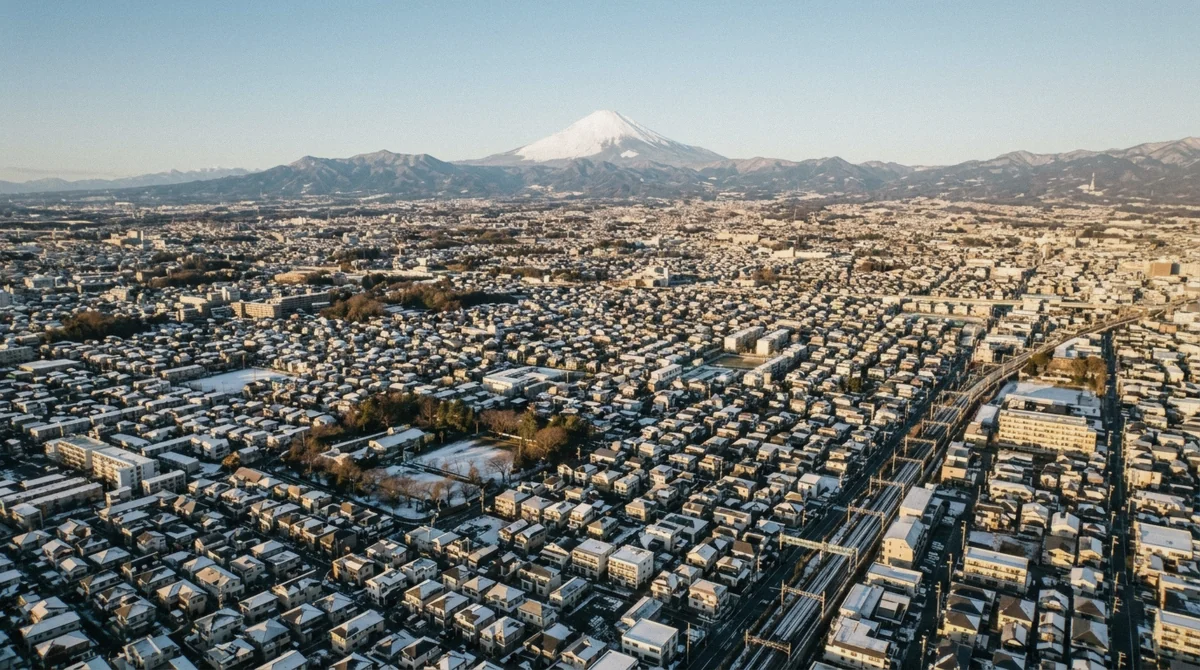
Winter is the payoff season, and Mount Fuji is the reason. This is the one place on the site where I want to explain fully why winter wins, since it comes up on nearly every flight I guide. Tokyo's winter air is cold and, more importantly, dry, with average highs sitting around 10 to 12 degrees Celsius and lows dipping close to freezing in January.
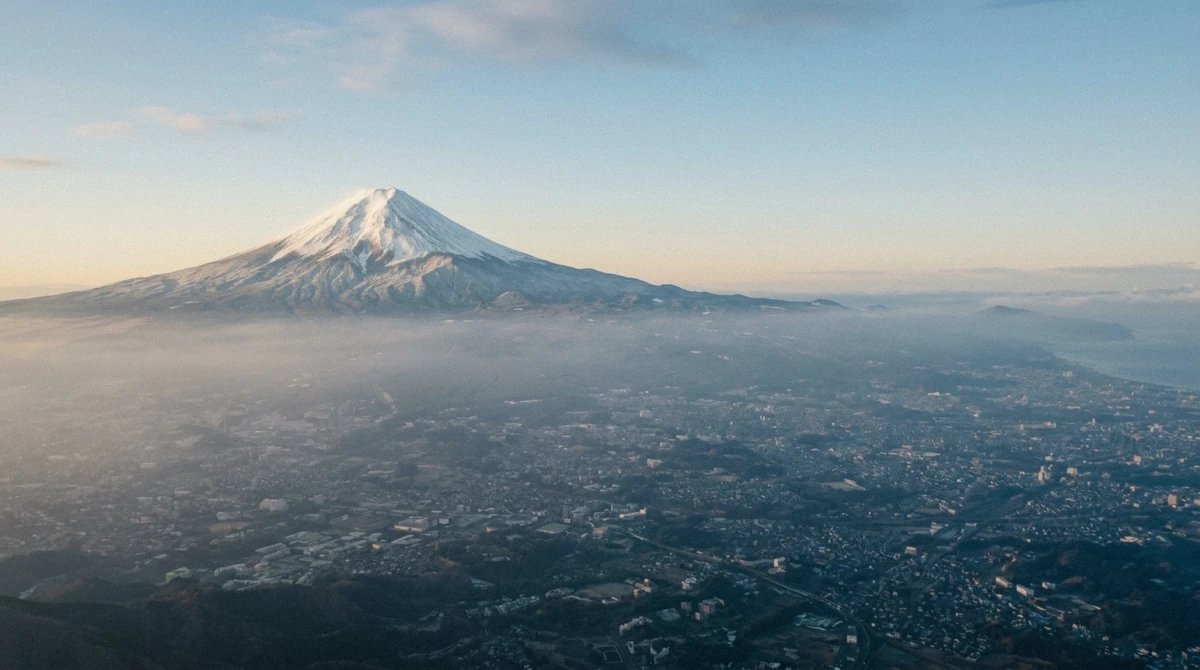
Dry air holds far less haze than the humid air of summer, and haze, not cloud cover, is what usually stands between you and a clear view of Mount Fuji from roughly 100 kilometers away. That combination is why Mount Fuji is visible from the Tokyo area on well over 100 days a year, and the large majority of those days fall in winter. It is never a guarantee on any single flight, since wind direction and same-day haze still vary, but a December, January or February morning gives you the best odds of the year by a wide margin.
The 90-minute Mount Fuji and Kamakura Private Tour is built specifically around this window, routing past Lake Ashinoko and Enoshima Island in addition to the mountain itself.
- Average highs around 10 to 12 degrees Celsius, lows near or below freezing
- The driest, least hazy air of the year
- Mount Fuji visible on well over 100 days annually, most of them in winter
- Best paired with a morning departure for the calmest air of the day
What Actually Affects Conditions
Most people assume rain is the thing to watch for. In practice, it is wind and haze that decide whether a flight over Tokyo delivers a clear view, not rain itself. Haze forms from humidity and airborne particulates suspended in warm, moist air, and it builds steadily through spring into a thick summer layer that flattens the skyline and hides Mount Fuji even on a technically dry day.
Winter breaks that cycle because cold air holds far less moisture, so the same clear morning that keeps the ground frosty is also the one where the horizon actually looks sharp from altitude. Wind matters in a different way: it is the main factor pilots weigh when deciding whether conditions are calm enough to fly at all, more than a light drizzle would be. That is also why a rainy-season month can still deliver a smooth, clear-enough flight between passing showers, while a technically dry but gusty afternoon can still ground a departure.
If you are chasing a specific view, especially Mount Fuji, dry winter air is doing more work for you than a rain-free forecast ever will.
Best Time of Day
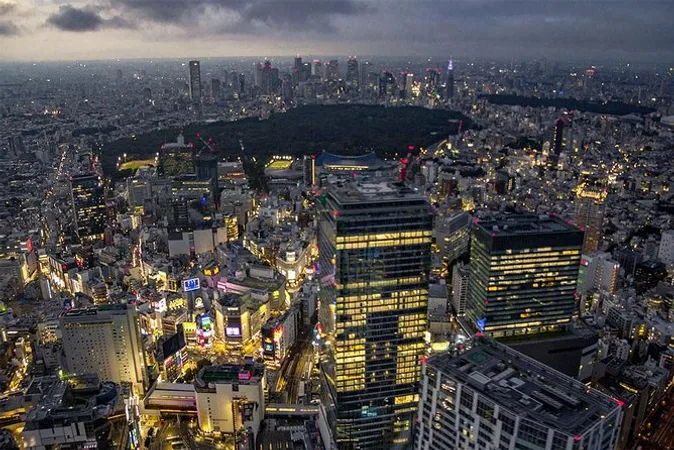
Morning wins, and it isn't close. Roughly 6:00 to 9:00 AM is when Tokyo's air is calmest, before afternoon heating builds the light turbulence that comes with rising ground temperatures, and it is also when haze is at its thinnest for the day, which matters most if Mount Fuji is on your list. That said, evening and night flights are a genuinely different, worthwhile experience rather than a lesser one: the 25-Minute Downtown Tour offers an evening departure over Skytree and Tokyo Tower, trading Mount Fuji's daytime silhouette for the city lit up below, which is its own kind of clear-sky payoff once the sun is down.
If a single clean answer helps, book morning for the calmest air and the best Mount Fuji odds, and book the evening option specifically if city lights, not the mountain, are what you came for. To see the full range of what either time slot actually shows you, our guide to what the flights actually cover breaks down the landmarks by route.
What If the Weather Turns?
A little rain on your date is rarely the problem, since wind and haze do most of the deciding, as covered above. If your flight does get scrubbed for weather, you are not out the money you paid, and rebooking is usually straightforward rather than a fight. For the full breakdown of who actually makes that call, how far ahead you'll know, and exactly what happens to your booking, see our guide to the cancellation and refund rules.
So, When Should You Go?
November through February is the best window for a Tokyo helicopter tour, when dry, haze-free air delivers the clearest views of the city and the best odds of a Mount Fuji sighting of any time of year. October is the honest runner-up, once typhoon season fades but before winter's driest air fully sets in. June through early September is the stretch to avoid, when rainy-season humidity gives way to peak typhoon risk and the year's haziest skies.
Whichever window fits your trip, book a morning departure if you can, and browse the full range of helicopter flights over Tokyo before you lock in a date. If you're still weighing whether the flight is worth booking at all, our honest look at whether the spend is justified covers that question directly.
Frequently Asked Questions
What is the best month for a Tokyo helicopter tour?
November through February, when dry winter air keeps haze low and gives you the best odds of seeing Mount Fuji from the cabin. October is a solid alternative once typhoon season has largely passed.
Is a Tokyo helicopter tour worth flying in the rainy season?
It can still run, since light rain often passes between clear stretches, but the honest trade-off is thicker haze and a real chance of a wind-related cancellation. If your dates are flexible, aim outside early June through mid or late July instead.
How far in advance should I book during cherry blossom season?
As early as your dates are fixed. Late March into early April is Tokyo's busiest flight window of the spring, and slots for that week fill well before the bloom actually opens.
How many spare days should I leave in my itinerary in case my flight is cancelled for weather?
Build in at least one full spare day beyond your scheduled flight, especially if you're visiting during typhoon season (peaking in August and September) or the rainy season stretch from early June to mid or late July, since a weather cancellation with no slack left in your schedule means missing the flight entirely rather than simply moving it a day later. Outside those windows, one buffer day is normally enough; during peak typhoon season, two if your schedule allows it.
When is typhoon season in Tokyo and does it affect flights?
June through October, with the highest risk in August and September. It is the single biggest weather factor to plan around if you want to avoid a cancellation, more so than any single rainy day.
How many days of clear weather does Tokyo typically get in winter?
Winter months run consistently dry with far fewer rainy days than the rest of the year, which is why Mount Fuji sightings and clear skyline views cluster so heavily in December, January and February.
I've flown this route on hazy August afternoons and on January mornings so clear that Mount Fuji looked close enough to touch, and the difference between the two is dry winter air, plain and simple. Pick your season with that in mind and the rest of the planning gets a lot easier.