What Happens If Your Tokyo Helicopter Tour Is Cancelled for Weather?

If weather cancels your Tokyo helicopter tour, AIROS Skyview gives you a full refund with no fee or a free reschedule, your choice, so you are not simply out the money you paid. I have gone through every operator policy behind these flights while researching this guide, and the mechanics are more specific, and more reassuring, than the vague reassurance most sites leave you with. Below is exactly why flights here actually get grounded, who makes that call and when you will find out, and what to do with the rest of your day if today turns out to be a wash. Every one of the Tokyo helicopter flights on offer carries free cancellation up to 24 hours out, which is the backstop behind all of this.
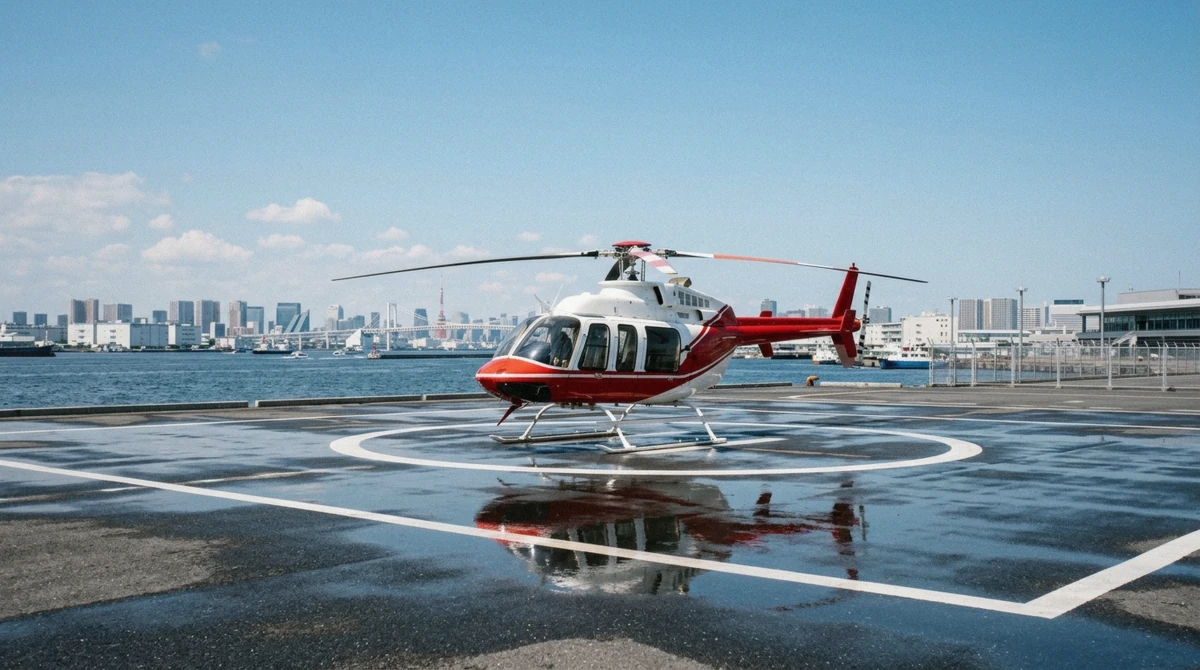
Quick answer
If weather cancels your Tokyo helicopter tour, you get a full refund with no fee or a free reschedule, your choice. It is wind, not light rain, that actually grounds flights here. JCAB sets the weather minimums that apply to every operator, so when conditions fall below that floor, nothing flies, whoever the operator is; above that floor, the specific go or no-go call is the pilot's and operator's judgment, which is why one company can sometimes fly in marginal conditions while another stands down.
Key takeaways
- Full refund, no fee, or a free reschedule, your choice, is the standard if weather cancels your flight
- Wind, not light rain, is what actually grounds a flight, decided by the pilot on the day
- You'll typically know the evening before by confirmation, or the morning of by a weather alert email
- The one trap clause to know: light rain that doesn't stop the flight from running is not refund-eligible
- Cancellations cluster in the rainy season and typhoon season, not evenly across the year
- Booking a morning slot early in your trip, not on your last day, is what actually makes a cancellation cost you nothing
Why Flights Here Get Cancelled
Wind is the real killer, not a light drizzle. Light sightseeing helicopters, the kind that fly these Tokyo routes, typically stand down once sustained wind climbs into the range operators consider unsafe for a small aircraft, generally somewhere above 30 to 35 knots, with a lower crosswind threshold and any large, unpredictable gusts also enough to scrub a flight on their own. That is an industry norm rather than a fixed number posted anywhere, and pilot judgment can ground a flight below it if conditions feel wrong on the day.
A steady, gentle rain over Tokyo Bay often does not stop a flight at all, since it is wind and cloud ceiling the pilot is actually weighing, not whether the windshield gets wet. The two seasons that carry real risk are Japan's rainy season, tsuyu, which typically runs from early June into mid or late July with sustained low cloud, and typhoon season, June through October with the sharpest risk in August and September. Outside of those windows, haze can cut how much you see without ever coming close to a cancellation threshold, which is a different problem entirely from a grounded flight.
Who Makes the Call and When You'll Find Out
Flights here operate under weather minimums set by the Japan Civil Aviation Bureau (JCAB); our guide to the safety record and restrictions covers the regulator and the certification behind it in full. When conditions fall below those minimums, every operator is grounded at once, there is no such thing as one company quietly flying through weather that shut everyone else down. Above that floor, though, the actual go or no-go call on any given day comes down to the pilot's and the operator's own judgment, not a single switch that flips the same way for every company, which is exactly why a different operator might fly on a day yours didn't: different aircraft, different routes and a different pilot's read on the same borderline wind can produce a different call inside the same regulatory floor, and it isn't a sign anyone cut corners.
On the timeline, your booking is typically confirmed around 6:00 PM the evening before your flight, and if weather looks questionable, a weather alert is emailed the morning of your slot. If you haven't heard anything and your departure time is approaching, the right move is to head to the heliport as planned unless you've been told otherwise, and confirm with staff on arrival if conditions look borderline. Waiting at home on the assumption that no news means bad news usually costs you more than just showing up would.
Refunds and Rebooking: What the Standard Is
The standard across AIROS Skyview's fleet is simple to state: if weather cancels your flight, you get a free reschedule or a full refund, no fee either way, and it's your choice which. Free cancellation up to 24 hours before your slot is standard on top of that, separate from a weather cancellation entirely. Where people get caught out is the fine print around that happy path.
Light rain that doesn't actually stop the flight from operating is not a refund trigger, since the flight ran as scheduled even if the forecast looked rough on paper. A cancellation you initiate yourself inside that 24-hour window is treated as a traveler cancellation, not a weather one, and typically is not refunded the same way. Same-day rebooking onto a later slot the same day is realistic only if the wind that grounded your original flight has genuinely eased, since the same conditions usually hold across an entire morning or afternoon rather than clearing in an hour, so plan on a different day rather than a later slot the same day.
- Weather cancellation: free reschedule or full refund, no fee, your choice
- Light rain the flight still runs on: not refund-eligible, since the flight operated as booked
- You cancel inside 24 hours yourself: treated as a traveler cancellation, not weather
- Same-day rebooking onto a later slot: possible but not reliable, since grounding wind rarely clears within a few hours
One honest note on timing: how fast the money actually shows up depends on how you booked. A direct booking with the operator typically refunds to your card in about 24 to 48 hours. A booking made through the booking platform typically takes several business days to appear on your statement, even once the refund itself has been approved.
Scenario Table: What Actually Happens
Here is how the main situations play out in practice, from the evening-before check through a genuine no-show.
| Scenario | What Happens | Your Move |
|---|---|---|
| Cancelled the evening before | You're notified with the confirmation, offered a free reschedule or full refund | Rebook the first available slot, ideally still early in your trip |
| Cancelled the morning of, by weather alert email | You're notified before you'd normally leave for the heliport | Don't head out until the alert or a staff call confirms the flight status |
| Grounded at the heliport itself | Staff explain the call in person, the same refund or reschedule choice applies | Ask for that choice directly rather than assuming which one you'll get |
| You cancel less than 24 hours out | Treated as a traveler cancellation, not a weather one, typically no refund | Cancel earlier than 24 hours if your plans are genuinely uncertain |
| You cancel 24 hours or more out | Standard free cancellation applies | Cancel as early as you know your plans have changed |
| Light rain, but the flight runs as scheduled | No refund, since the flight operated normally | Decide before booking whether light rain is acceptable to you |
| No-show, no notice given | No refund, no reschedule offered | Call ahead the moment you know you won't make it |
How Often Does It Happen Here?
Cancellation risk is not spread evenly across the year here, and it lines up closely with the same seasonal pattern covered in our guide to when to fly for the clearest views.
| Season | Cancellation Risk | Why |
|---|---|---|
| Winter (December to February) | Low | Cold, dry, generally calm air with clear skies |
| Spring (March to May) | Low to moderate | Mild through March, rising humidity and occasional rain by May |
| Summer (June to August) | High | Rainy season low cloud into July, then rising typhoon risk in August |
| Autumn (September to November) | Moderate, easing to low | Typhoon season peaks in September, clears fast by November |
Winter carries the lowest cancellation risk of the year, while summer, especially August and September, carries the highest, driven by typhoon season stacked on top of the rainy season's low cloud. That is a genuinely different question from whether a specific operator cancels more than usual, which would be a sign of an overly cautious or under-maintained operation rather than the season doing its job.
How to Plan So a Cancellation Costs You Nothing
A cancellation only actually costs you something if your booking leaves no room to recover from it. A little planning around that removes most of the risk.
- Book a morning slot, when wind is calmest and cancellation odds are lowest
- Book early in your trip, never on your last full day, so a reschedule has somewhere to go
- Keep two or three back-up days open on your itinerary rather than one fixed date
- Choose a flexible-length flight if your schedule itself is tight and hard to shift around
Browsing the full range of Tokyo helicopter tour options before you book makes it easier to spot which route gives you the most flexibility to reschedule if your first date doesn't work out.
What to Do Instead If Today Is a Wash
A grounded flight doesn't have to sink the day. A few solid, weather-proof alternatives within easy reach of central Tokyo:
- Go up Tokyo Skytree or Tokyo Tower instead for a static high view of the same skyline your flight would have shown you, minus the wind sensitivity; the honest case for and against compares the flight against a deck ticket directly, and our guide to which sights show up on a flight covers what you'd have seen from the air.
- Spend the afternoon at teamLab's digital art spaces, entirely indoors and unaffected by weather.
- Take a Tokyo Bay cruise, which tolerates far rougher conditions than a small helicopter can.
- Explore one of Tokyo's covered museum districts, from art to design to science, all fully indoors.
- Wander Asakusa's Senso-ji temple grounds and the covered Nakamise shopping street, sheltered enough for a drizzly day.
- Rebook your flight for a clearer morning and use the freed-up day for whichever of the above fits your itinerary best.
Does Travel Insurance Cover This?
Largely no, and that's a good thing rather than a gap, since AIROS already refunds you directly for a weather cancellation as covered above. Where travel insurance actually earns its keep is consequential costs a refund doesn't touch: a missed connecting activity booked around your flight time, non-refundable transport you arranged specifically for that day, or a hotel night that only made sense around the flight. Insurance also matters if you are the one cancelling, outside the free-cancellation window, rather than the operator.
Credit-card travel protection generally covers more of this than basic debit-card coverage, so it's worth checking which card you booked with. None of this overlaps with injury or medical coverage, which is a separate question we cover in our guide to the weight and age rules.
Frequently Asked Questions
Will my Tokyo helicopter tour run in light rain?
Usually, yes. Wind and cloud ceiling are what a pilot actually weighs, not whether it's drizzling, so a steady light rain often doesn't stop a flight from operating as scheduled.
How will I know if my flight is cancelled?
Your booking is confirmed around 6:00 PM the evening before, and if conditions look questionable, a weather alert is emailed the morning of your flight. If you haven't heard anything as your slot approaches, head to the heliport as planned and confirm with staff.
Do I get a full refund if weather cancels my flight?
Yes, a full refund with no fee, or a free reschedule if you'd rather fly another day. The one exception is light rain the flight still ran in, which isn't treated as a weather cancellation at all.
Can I check right now whether flights are running today?
This page can't show live status, but your booking confirmation email and a same-day weather alert are the two channels that will. If your departure time is close and you've heard nothing, calling the heliport directly is the fastest way to confirm.
Why would another operator still be flying if mine is cancelled?
Because the decision sits with each pilot and operator individually rather than a single shared switch. Different aircraft, routes and risk tolerances can legitimately produce different calls on the same windy day, and it isn't a sign either operator is cutting corners.
How often are Tokyo helicopter tours cancelled for weather?
It varies sharply by season. Winter carries the lowest risk of the year, while August and September, when typhoon season peaks, carry the highest. Our guide to the best time of year to fly breaks the full pattern down month by month.
Does travel insurance cover a weather-cancelled helicopter tour?
Not really, since the operator already refunds you directly. Insurance matters more for costs the refund doesn't touch, like a missed connecting activity or non-refundable transport booked around your flight time.
A weather cancellation over Tokyo is more of an inconvenience than a real loss once you know the mechanics: you'll get your money back or a new date, and the honest planning move is simply not to leave yourself no room to use either one.