Are Tokyo Helicopter Tours Safe? An Honest Answer and Who Should Reconsider

Are Tokyo helicopter tours safe? Yes, by every regulatory measure that matters: every flight over this city operates under the same civil aviation oversight as a scheduled airliner, just scaled down to a much smaller aircraft. Safe does not mean suited to everyone, though, and a genuine slate of passengers should think twice before booking, starting with anyone over the per-seat weight limit or unable to climb the aircraft's roughly 20 centimeter step without help. Below is what actually keeps these flights safe, the real risks a good operator manages rather than hides, the full restriction table before you spend a yen on a booking, and who is honestly better off staying on the ground and looking up instead. Once you know where you stand, you can book a Tokyo helicopter tour with a clear idea of what to expect.
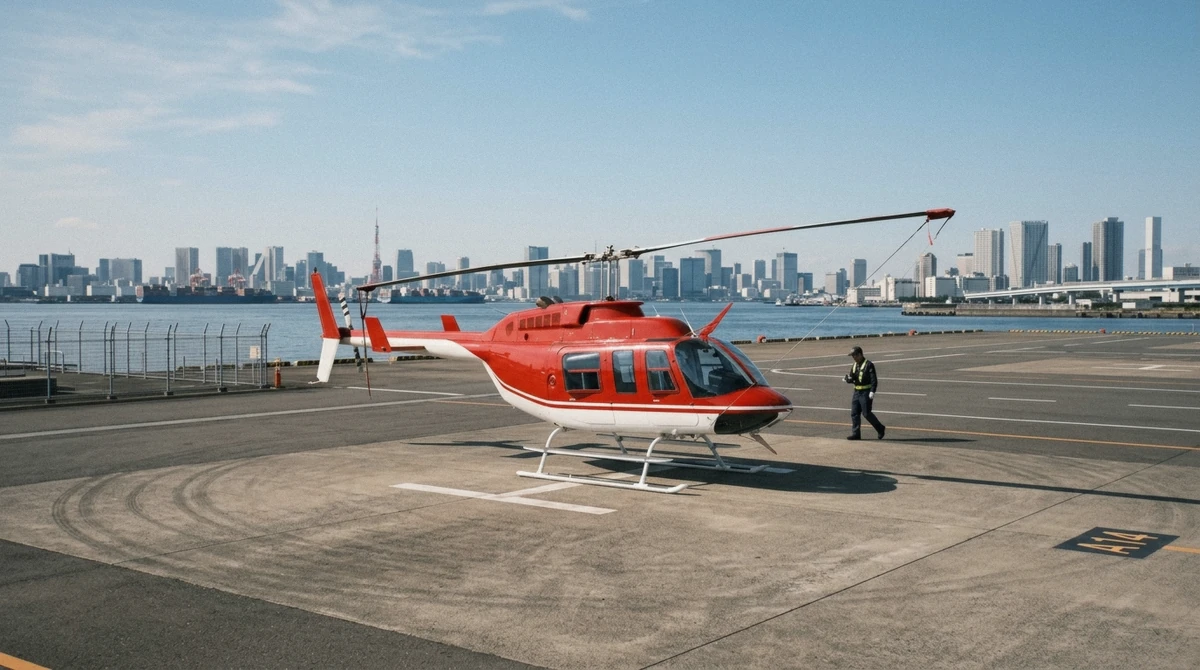
Quick answer
Tokyo helicopter sightseeing is heavily regulated: every flight operates under JCAB certification, a licensed commercial pilot, and defined weather minimums, but it genuinely is not for everyone. The two most common reasons a booking gets turned away are exceeding the roughly 120 kilogram per-seat weight limit and being unable to climb the aircraft's step, about 20 centimeters up, without assistance. Neither is negotiable on the day of the flight, so it is worth checking both before you book rather than after.
Key takeaways
- Every operator flying tourists over Tokyo answers to the same aviation regulator and the same weather minimums, so no single company is quietly cutting corners the others aren't
- The two hard exclusions are the per-seat weight limit and the unaided boarding step; almost everything else, including pregnancy and most medical conditions, is a judgment call between you and your doctor
- The loudest real risk isn't mechanical, it's wind: a good operator cancels rather than flies in marginal conditions, and the cancellation policy protects you when that happens
- The full restriction table below covers weight, age, pregnancy, mobility and medical conditions in one place before you book
- If you're excluded, Tokyo Tower and Tokyo Skytree both put you at real height over the city without ever leaving the ground
Is Tokyo Helicopter Sightseeing Actually Safe? The Honest Record
Search for a published accident rate for Tokyo sightseeing helicopter flights specifically and you won't find one. No regulator or operator publishes a per-operator or per-route safety statistic for this category of flight, so anyone quoting you a precise number or a percentage on this is guessing, not citing anything real. That absence isn't itself a red flag: most narrow categories of commercial aviation don't have their own separately published accident rate, and Tokyo sightseeing helicopters are exactly that kind of narrow category.
What you can verify instead is the regulatory framework the flights operate inside. Commercial helicopter sightseeing in Japan falls under the Japan Civil Aviation Bureau (JCAB), a bureau of the Ministry of Land, Infrastructure, Transport and Tourism, and under the Civil Aeronautics Act, the law covering aircraft airworthiness certification, pilot licensing and operating weather minimums. A sightseeing flight over Tokyo runs under that same commercial framework, not as a casual private flight arranged informally between a pilot and a passenger, and that distinction is exactly where a genuine safety gap would show up if there were one.
The honest verdict: this is a heavily regulated category of commercial aviation with no published incident data specific to it, good or bad. The variable actually inside your control isn't a statistic, it's which operator you book and whether you respect the weather call on the day, both covered in full below.
What Makes It Safe: Rules and Oversight
Commercial helicopter sightseeing in Japan sits under the Japan Civil Aviation Bureau, JCAB, a bureau of the Ministry of Land, Infrastructure, Transport and Tourism. JCAB is Japan's equivalent of the aviation authority most travelers already trust without thinking about it back home, and it operates under the Civil Aeronautics Act, the law that governs aircraft registration, airworthiness certification, pilot licensing and operating weather minimums for every powered aircraft in the country, helicopters included.
A company cannot simply buy a helicopter and start selling seats. It has to hold a JCAB operating certificate, fly aircraft that pass JCAB airworthiness inspection on a fixed schedule, and crew every flight with a pilot who holds a JCAB commercial license current for that aircraft type. AIROS Skyview, which operates every flight out of Tokyo Heliport, works under this same structure, with no separate or looser rulebook for sightseeing flights versus any other kind of commercial aviation.
Above JCAB's weather minimums, the specific go or no-go call on any given flight belongs to the pilot and operator; see how the weather call and cancellations actually work for the full mechanics.
The Real Risks and How Good Operators Manage Them
Safe does not mean risk-free, and the honest version of this answer names the real things that can go wrong rather than waving them away with a slogan.
- Wind and weather judgment. Helicopters are more wind-sensitive than airliners, and the single biggest variable in any flight's safety margin is the pilot's read of conditions on the day. AIROS builds in a same-morning weather check and a no-fee cancellation if conditions don't clear the bar; see how the weather call works for exactly how that process works.
- A loud cabin. Rotor and engine noise inside a light helicopter is loud enough that normal conversation doesn't carry, which is why every passenger wears a headset connected to the pilot and, on shared flights, to each other. It sounds like a small detail until you're airborne and realize it's the only way to ask a question or hear the safety briefing repeated over the city.
- Boarding near live rotors. The rotor blades are spinning, or about to be, for most of the time you're near the aircraft, and the crew choreographs boarding for exactly that reason: a fixed approach path, a set order, someone physically guiding each passenger's line to the door. It looks unhurried from the outside, and it's designed that way on purpose.
- Motion for the sensitive. Banking turns and quick altitude changes can trigger motion sickness in passengers prone to it, more so than in a fixed-wing aircraft. Pilots fly smoother routes than the aircraft is capable of specifically to manage this, and a window seat with a clear horizon view tends to help more than staring down at a phone or camera screen the whole flight.
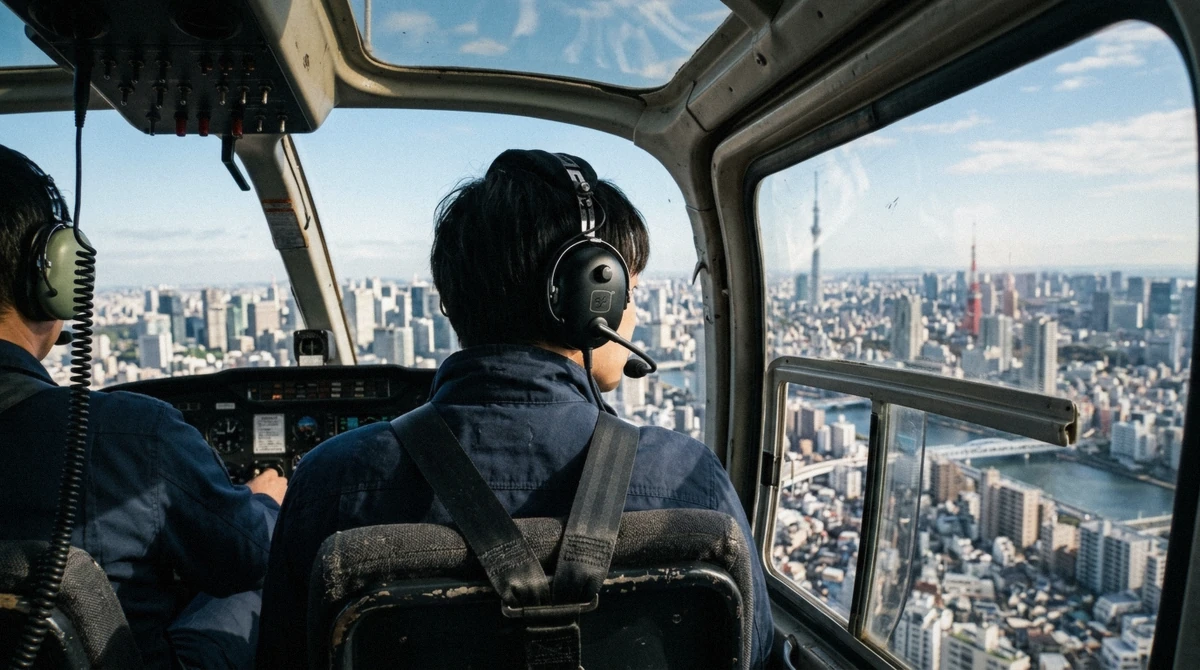
Who Can and Can't Fly: Restrictions at a Glance
This is the table most operator pages skip entirely. Every row below reflects AIROS Skyview's actual rules on Tokyo flights, not a generic aviation disclaimer copied from somewhere else.
| Restriction | Rule on Tokyo (AIROS) flights | Why it exists | Ask before booking if |
|---|---|---|---|
| Weight, per seat | Up to 120 kg per passenger | Helicopters fly to a certified maximum takeoff weight, distributed by seat; exceeding it changes the aircraft's balance and performance | Any single passenger is close to or over 120 kg |
| Weight, whole group | Roughly 210 kg total payload on a 3-seat aircraft (more on the 4-passenger aircraft used for the Skytree & Tokyo Station tour) | The combined weight limit is separate from, and is often the actual reason a booking gets declined ahead of, any one passenger's individual limit | Your group's combined weight is close to the aircraft's total payload, even if no one person is near 120 kg alone |
| Age | No fixed minimum, but every passenger must board and exit unaided, including a step of roughly 20 cm; a child under 2 may ride on an adult's lap at no charge if confirmed in advance, and age 3 and up counts as a full passenger and a full seat | The step and the seatbelt are built for a passenger who can climb in and sit unassisted; there's no separate child restraint fitted on board | You're traveling with a toddler or young child and haven't confirmed the lap-ride policy directly with the operator first |
| Pregnancy | No outright ban, but AIROS advises talking to your doctor before flying | Vibration, cabin pressure changes and the general physical jostle of a small aircraft are a reasonable thing to clear with a doctor first, same as any other flight | You're pregnant and haven't had that conversation with your doctor yet |
| Mobility or wheelchair use | No wheelchair provision on board; you must manage the boarding step and cabin seating unaided | The heliport apron and the aircraft door aren't built for a chair transfer, and the crew's boarding choreography assumes every passenger can move independently near the rotors | You use a mobility aid; the flight with private car pickup and the flight with hotel pickup ease the door-to-heliport leg of the day, but neither changes the boarding step itself |
| Heart condition, high blood pressure or recent surgery | No specific AIROS restriction is published; standard aviation caution applies | Cabin vibration, brief g-forces in turns and the general exertion of boarding and the flight are worth a doctor's sign-off if a condition is relevant | You've had recent surgery or manage a cardiac or blood pressure condition and haven't asked your doctor about small-aircraft flights specifically |
Read the group-weight row twice if you're traveling as three adults. It's the restriction that surprises the most bookings, because it's easy to check your own weight against the 120 kg per-seat line and forget that the aircraft carries a combined limit too.
How to Choose Safely: What a Good Operator Does
A good Tokyo helicopter operator doesn't rush the parts that matter, and the difference is easy to spot once you know what to look for.
- An unhurried briefing that actually covers the headset, the seatbelt, and what to do if the pilot asks you to stay seated after landing, not a thirty-second recap read off a card
- A genuine weigh-in rather than a guess, an eyeball estimate, or a step that quietly gets skipped when the queue is long
- A headset check before the rotors spin up, not after, so you know it's working before you actually need it
- A crew willing to say a flight is delayed or moved to a later slot rather than push a marginal boarding through on schedule
Situation by situation, this is what separates a careful operator from one you should walk away from.
| Situation | What a good operator does | Warning sign |
|---|---|---|
| The weather call on the morning of your flight | Checks conditions against JCAB minimums and cancels with a full refund rather than pushing a marginal flight through | Pressure to fly anyway, or vague reassurance instead of a straight answer about conditions |
| The pre-flight safety briefing | Walks every passenger through the headset, the seatbelt and the boarding path, unhurried, before anyone nears the aircraft | A rushed thirty-second recap, or a briefing skipped entirely because the group is small |
| The weigh-in at check-in | Actually weighs each passenger and checks the total against the aircraft's payload limit | An eyeball guess, or a form you fill in yourself with no one checking it |
| Boarding near the live rotors | Guides each passenger in a fixed order along a set path, timed to the rotor state | Passengers waved toward the aircraft with no clear order or path while blades are turning |
| A passenger who is over the limit at check-in | Says so plainly, offers a rebooking or split-group option, and explains why | Quietly waves it through or argues the scale instead of adjusting the booking |
Once you clear the table above, the more interesting question becomes the landmarks each route passes, and the full price breakdown once you've picked a route.
Who Should Reconsider
If you or your group is over the combined weight limit
a single aircraft isn't bookable as sized; ask the operator whether splitting your party across two flights is realistic before writing off the idea entirely.
If you can't climb a small step unaided
the honest alternative is going up rather than out. Tokyo Skytree and Tokyo Tower both put you at real height over the city with no boarding requirement at all.
If you're prone to motion sickness on small aircraft
a shorter flight, like the 10-minute bay tour, gives you far less exposure time than the 90-minute Mount Fuji route.
If you're pregnant or managing a heart or blood pressure condition
talk to your doctor before booking rather than deciding it yourself; most flights are fine to take with a doctor's clearance.
If none of the above applies to you
book the flight and let the crew's weigh-in and briefing handle the rest. That's exactly what those steps are there for.
Frequently Asked Questions
Can I fly on a Tokyo helicopter tour if I'm pregnant?
There's no outright ban, but AIROS Skyview advises speaking with your doctor before flying, the same caution worth applying to any small aircraft. If your doctor clears it, there's no separate operator restriction beyond that conversation.
Is there a weight limit for the whole group, not just one person?
Yes, and it's the restriction most people miss. Beyond the 120 kg per-seat limit, a 3-seat aircraft carries a combined payload cap of roughly 210 kg. Three adults can each be individually well under the per-seat limit and still push past the group total, so it's worth adding up your party's weight before booking, not just checking each person against 120 kg alone.
Can young children fly on a Tokyo helicopter tour?
There's no fixed minimum age, but every passenger has to board and sit unaided, including a step of roughly 20 cm up into the cabin. A child under 2 can usually ride free on an adult's lap if you confirm it with the operator ahead of time, while age 3 and up is treated as a full passenger occupying a full seat.
Is flying at night over Tokyo any less safe than during the day?
Night flights operate under the same JCAB certification, aircraft standards and pilot licensing as daytime flights; there's no separate, looser rulebook after dark. The practical difference is visual reference over the water and the skyline rather than the underlying safety oversight, and pilots are certified for the conditions they fly in either way.
What if the weather looks questionable on the day of my flight?
You'll get a weather alert if conditions look questionable; see what happens if your flight is cancelled for weather for the full refund and rescheduling process.
Can someone with a heart condition or high blood pressure fly?
There's no published AIROS restriction naming these conditions specifically, but the cabin vibration and brief g-forces in turns are worth clearing with a doctor first if a condition is relevant to you, the same caution that applies to most small-aircraft flying.
Is there a wheelchair-accessible option for the helicopter tours?
No. There's no wheelchair provision on board, and every passenger has to manage the boarding step and cabin seating unaided. The private car and hotel pickup tours make the journey to the heliport easier, but neither changes the physical boarding requirement itself.
We've watched this process from the ground often enough to know that safety here isn't a marketing line, it's paperwork, weigh-ins and a regulator that treats a ten-minute sightseeing hop with the same seriousness as a scheduled flight. If you clear the restrictions above, the rest is genuinely just about picking a flight length and a route that fits your day, and deciding our honest look at the value for what it costs. If you don't clear them, there's no shame in taking the view from the ground instead, and Tokyo happens to offer two very good ways to do that.